


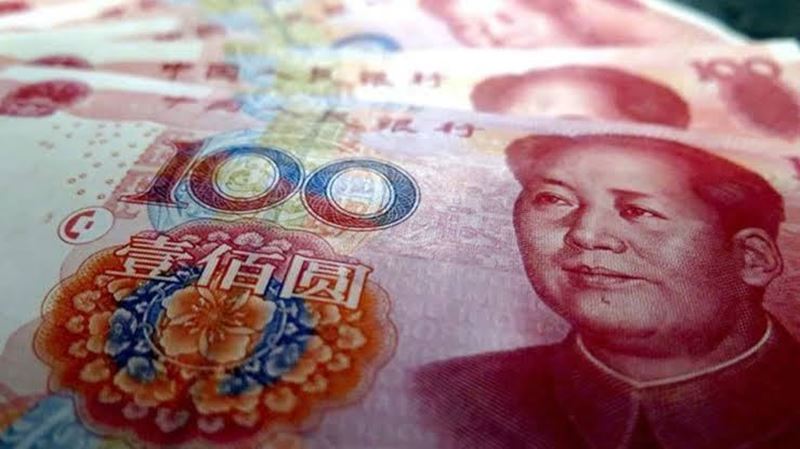
According to official statements, China’s Ministry of Finance will issue special bonds to strengthen the capital positions of eight financial institutions, including Industrial & Commercial Bank of China, Agricultural Bank of China and People’s Insurance Company of China.
Beijing has provided a total of 500 billion yuan in government capital to the financial sector since the beginning of 2025 to support economic activity. The latest move is also expected to enable banks to extend more loans and expand financing opportunities for the real economy.
Premier Li Qiang recently called on officials to step up efforts to achieve the annual growth targets. Chinese policymakers are also reportedly considering various financing support measures for companies and consumers, in addition to credit subsidies.
Although financial institutions in China are currently considered to have sufficient capital buffers, the recapitalization plan is seen as aimed at strengthening banks’ lending capacity in advance. The move is intended to ensure the continued flow of credit to businesses and households.
Beijing seeks to contain financial risks
Financial stability is an important part of President Xi Jinping’s economic policies. While China is dealing with pressure from its ongoing trade and technology rivalry with the United States, it is also seeking to contain risks stemming from problems in the property sector and high local government debt.
Liao Zhiming, an analyst at Huayuan Securities, said the recapitalization of major state-owned financial institutions was part of a policy shift that has been underway for the past two years, rather than a short-term intervention.
Liao said carrying out capital adjustments in advance would help banks meet regulatory requirements while maintaining their lending capacity to support the real economy.







Comments
No comment yet.