


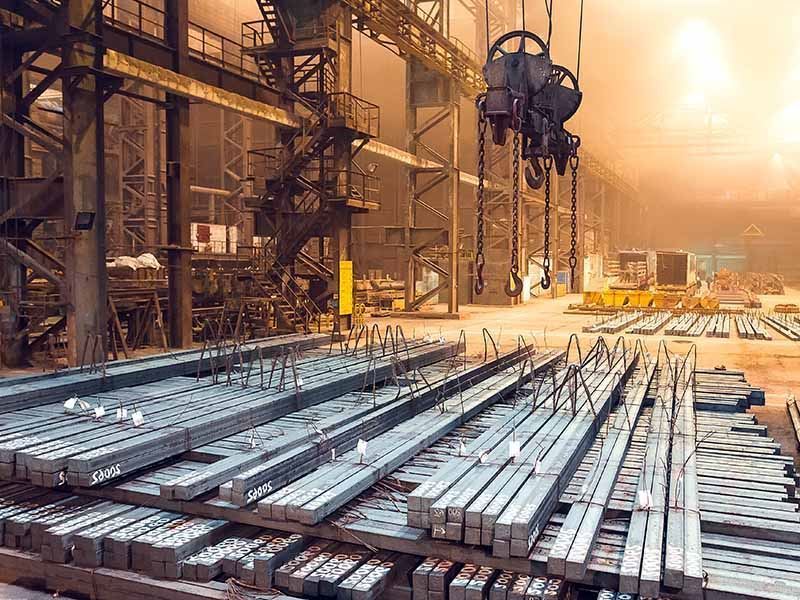
From 1 January 2028, the scope of the Carbon Border Adjustment Mechanism (CBAM) will be expanded to include steel- and aluminium-intensive downstream products. The move aims to protect EU producers that are vulnerable to carbon leakage, reward cleaner companies at a global level, and promote a fair and competitive playing field.
The new measures take into account concerns raised by trusted international partners and introduce the concept of equivalence with regard to carbon taxation and price rebates. The Commission is also enabling trade facilitation through a new provision allowing for the mutual recognition of reliable accreditation bodies.
The EU’s current CBAM framework targets basic materials such as aluminium, cement, electricity, and steel. From 2028 onwards, importers will be required to pay a carbon price for emissions linked to these goods, ensuring a level playing field with EU-produced materials subject to the Emissions Trading System (ETS). However, rising costs for steel and aluminium used in final products—such as household appliances—risk shifting production to countries with weaker climate policies or replacing EU goods with more carbon-intensive imports.
To mitigate this risk, the Commission plans to extend CBAM coverage to around 180 steel- and aluminium-intensive products, including machinery and household appliances. The majority of these products (94%) consist of heavy machinery and specialised equipment with high steel and aluminium content used in industrial supply chains, while a smaller share (6%) covers household goods. This expansion is intended to ensure that emissions are reduced rather than merely displaced.
The Commission is also promoting the use of scrap to reduce emissions in energy-intensive products by including pre-consumer aluminium and steel scrap in CBAM calculations. Enhanced reporting requirements and measures addressing misreporting of emission intensities are expected to strengthen CBAM’s effectiveness against abuse that exceeds its financial obligations.
To support EU producers and reduce carbon leakage risks, a temporary Decarbonisation Fund has also been established. The fund will cover part of the carbon costs under the EU ETS and provide support linked to producers’ decarbonisation efforts. Financing will come from Member State contributions and EU Own Resources: 25% of CBAM certificate revenues in 2026 and 2027 will be retained by Member States, while the remaining 75% will be channelled into the EU budget.
In addition, the European Commission has published a report assessing the implementation of CBAM during the October 2023–2025 transition period. The report highlights CBAM’s important role in tackling carbon leakage and promoting global carbon pricing, while also outlining the implementation roadmap and measures required to ensure an efficient and effective regime from 2026 onwards.
CBAM is positioned as a key instrument in achieving the EU’s 2050 climate-neutrality target in line with the Paris Agreement. While the EU ETS prices carbon emissions within the EU, CBAM assigns a carbon price to goods sold into the EU from outside its borders. Launched in its transitional phase in October 2023, CBAM will enter its gradual financial application from 1 January 2026, in parallel with the phased-out free allocation under the EU ETS through 2034.



Comments
No comment yet.