


Algeria plans to bring the Gara Djebilet iron ore mine into operation in the first quarter of 2026. Located in the country’s southwest, the massive deposit is viewed as a cornerstone of economic diversification and national sovereignty. After remaining largely dormant for nearly 70 years, the site—often described as a “sleeping giant”—has reemerged as a strategic priority thanks to modern extraction technologies and accelerated infrastructure investments. Discovered in 1952, the mine is considered one of Africa’s largest iron ore deposits, with 3.5 billion tons in total reserves and nearly 2 billion tons of exploitable ore. Once fully operational, it is expected to generate close to USD 10 billion in annual revenue.
Phased production plan and technological infrastructure
The project will be implemented in two major phases through 2040. In the initial phase, 2–3 million tons per year will be transported by road. After 2026, the launch of the new railway line is expected to boost annual capacity to 40–50 million tons. Six processing plants built in the Tindouf desert—where temperatures reach 50°C—will operate using low-water-consumption technologies due to severe water scarcity in the region. Officials report that the extraction of the first 400,000 tons of ore indicates that the project is progressing on schedule.
A partnership between Algeria’s state-owned steel group FERAL and the Chinese consortium CMH forms the backbone of the project’s industrial integration. An integrated facility planned in the Béchar region will focus on flat steel production. Chinese companies including MCC, CWE and Haidai Solar are contributing their expertise in mining and energy infrastructure. The partnership operates under a 51% Algeria – 49% China ownership structure, aligning with the country’s long-term investment framework.
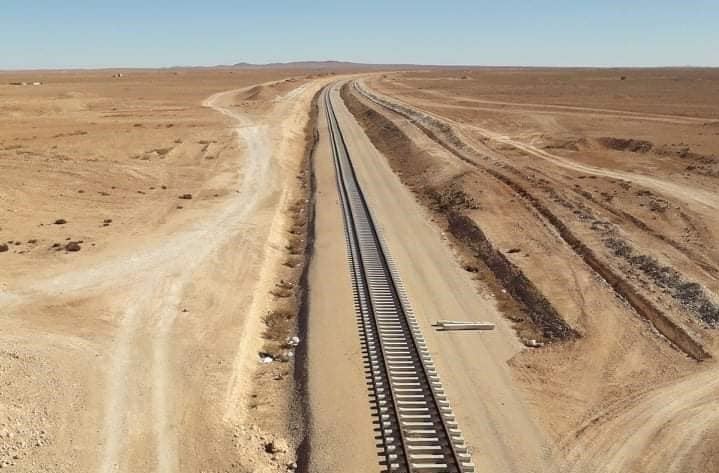
Railway completion to strengthen the logistics chain
The Béchar–Tindouf–Gara Djebilet railway line—designed to connect the mine with Algeria’s national industrial network and international markets—is now in its final stage. Minister of Public Works and Infrastructure Abdelkader Djaloui announced that the remaining 60 kilometers will be completed in December, with the entire line set to become operational in January 2026. The project also includes 45 bridges and modern logistics centers. The government expects that bringing Gara Djebilet online will boost non-hydrocarbon revenues and position Algeria as a regional force in the iron and steel industry. Growing global demand for critical minerals and the momentum of the green transition further elevate the project’s strategic importance.



Comments
No comment yet.