



The loan will enable the company to continue its operations and cover essential operating costs until the ongoing tender process is completed and the business is transferred to a new operator.
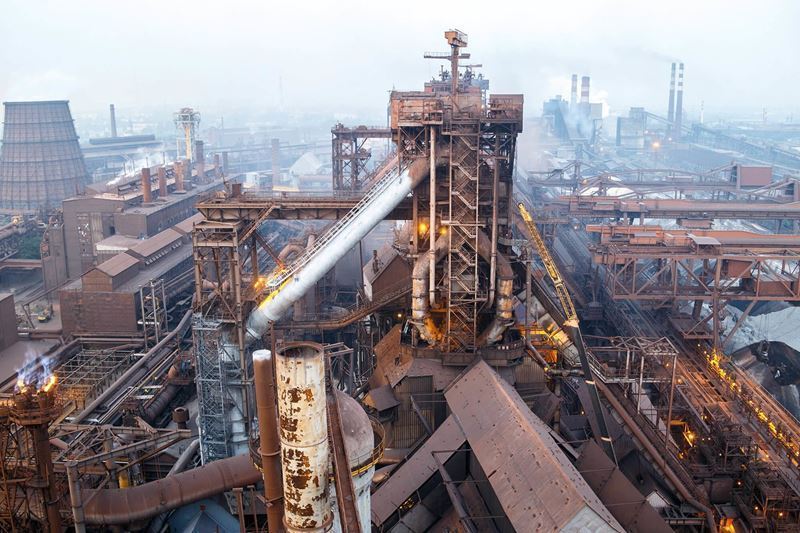
Operating with eight production and service facilities, Acciaierie d’Italia’s largest asset is its integrated steel plant in Taranto. Spanning approximately 15 million square meters, the site employs around 10,000 people 8,000 of whom are based in Taranto and has an annual crude carbon steel production capacity of 6 million tons. The steel produced is supplied to the automotive, household appliances, construction and infrastructure, packaging, mechanical engineering, and energy sectors.
The company has been under insolvency proceedings since February 2024 due to financial difficulties. The Italian government plans to complete the sales process shortly and transfer the business to the selected investor. During this transitional period, the company faces significant liquidity needs, particularly for wages and supplier payments. The approved rescue loan is intended to bridge this short-term financing gap.
Commission’s Assessment
As the steel sector falls outside the scope of the 2014 Rescue and Restructuring Aid Guidelines, the Commission assessed the measure under Article 107(3)(c) of the Treaty on the Functioning of the European Union (TFEU). This provision allows state aid that facilitates the development of certain economic activities, provided it does not adversely affect trade to an extent contrary to the common interest.
The Commission noted that a sudden cessation of Acciaierie d’Italia’s activities could have serious social and economic consequences, particularly in the Puglia region, where unemployment is above the EU average. It also highlighted the potential negative impact on the industrial value chain that depends on steel inputs.
The rescue loan is limited strictly to the projected liquidity shortfall, is priced at a market interest rate, and will be granted for a maximum duration of six months. At the end of this period, Italy must either submit a restructuring plan or demonstrate that the loan has been fully repaid. The Commission also emphasized that neither Acciaierie d’Italia nor its predecessor ILVA has received rescue or restructuring aid in the past ten years.
Environmental Obligations Remain in Focus
Regarding the Taranto plant, infringement proceedings against Italy have been ongoing since 2013 concerning the implementation of the Industrial Emissions Directive. The Commission stated that the approved rescue loan does not affect this procedure and that environmental obligations must be fulfilled.
According to statements from the Italian government, the new operator will be responsible for the plant’s decarbonization process. Plans include shutting down coal-based “hot area” operations, installing up to three electric arc furnaces, and ensuring full compliance with environmental permit requirements.
The Commission concluded that the aid does not unduly distort competition in the internal market and therefore approved Italy’s EUR 390 million rescue loan. It also indicated that a similar approach would be applied in comparable cases involving the steel sector.





Comments
No comment yet.