


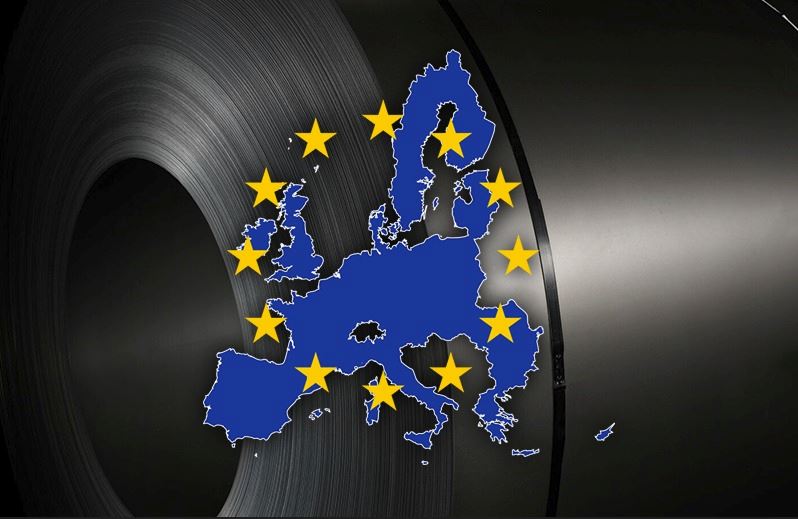
HRC Market Holds Steady as CBAM Uncertainty Drives Spot Purchasing
Hot-rolled coil (HRC) prices across Europe’s flat steel market remained largely stable despite the pressure created by provisional CBAM values. Buyers, still waiting for clarity on the emission obligations that will come into force in 2026, continue to avoid long-term bookings and opt instead for short-term, hand-to-mouth purchases.
In this context, January-delivery HRC in Germany is reported in the €610–620/t EXW range, while Italian mills are transacting at €590–600/t. DDP offers for January 2026 deliveries into Italy are expected to fall between €570–600/t. These figures indicate that the week is closing with prices virtually unchanged.
On the import side, HRC prices remain relatively steady; however, tighter quotas and rising CO₂-related charges are preventing imported material from exerting any meaningful downward pressure on EU domestic prices. As a result, the European market is not experiencing the typical price-softening effect usually generated by imports.
EU Steel Production Declines Amid Weak Demand and Regulatory Pressure
Latest figures from the World Steel Association show that the downward trend in European steel production has continued. Crude steel output in the EU fell by 3.5% year on year in October to 10.8 million mt. Total production for January–October reached 107.8 million mt, marking a 3.4% decline compared with the same period last year. This underscores the dual challenge faced by European mills: muted demand and increasing regulatory burdens.
Behind this broader picture lie shifting production strategies. In regions where demand and industrial activity are concentrated, press and tooling manufacturers are exploring geographic diversification to manage cost inflation, with some evaluating options outside the EU. On the demand side, the slowdown in automotive and white goods production—combined with the transitional impacts of CBAM—suggests that final consumption trends are being shaped primarily by short-term market conditions.
Türkiye–Europe Steel Relations Strengthen Further
As November draws to a close, Türkiye’s commercial ties with Europe show renewed momentum, particularly in steel.
Turkish companies continue to secure significant positions in key EU infrastructure projects. Erciyas Steel Pipe recently won a supply contract worth approximately EUR 7.86 million for a 42-km section of a natural gas transmission project in Romania—an important development for the region’s pipeline segment. Meanwhile, British Steel has signed a GBP 35 million contract to supply material for Türkiye’s high-speed rail network, strengthening the mutual industrial linkage between the two markets.
Moderate Fluctuation in Long Products and Profiles
Prices in Europe’s long products and steel profiles segment ended the week with modest fluctuations. German IPN offers from Peiner and Thüringen were reported between €710–730/t EXW, while Spain-based Celsa’s offers into Germany stood in a similar range. In Italy, Duferdofin’s IPN sales were transacted at €700–705/t. Market participants note that most deals were concluded €10–15 below headline list prices. Even so, the broader European profile market continues to trade around €700–740/t CPT.
In rebar, Germany maintained EXW levels at €580/t and CPT at €590–600/t. In Spain, prices stood at €640–645/t CPT and €620–630/t EXW. Overall, the long products market reflects a pattern of controlled stability rather than any pronounced downward trend.
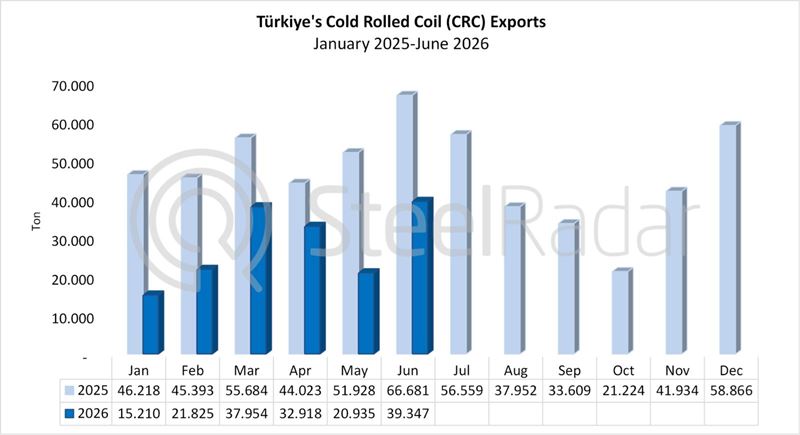
A similar picture is visible in the HDG and CRC segments. German HDG hovered at €710–730/t EXW, with CRC quoted at €700–720/t. In Italy, CRC remained in the €695–715/t band, while HDG stood between €715–720/t. These figures point to a week marked by narrow-band movements and limited volatility.




Comments
No comment yet.