


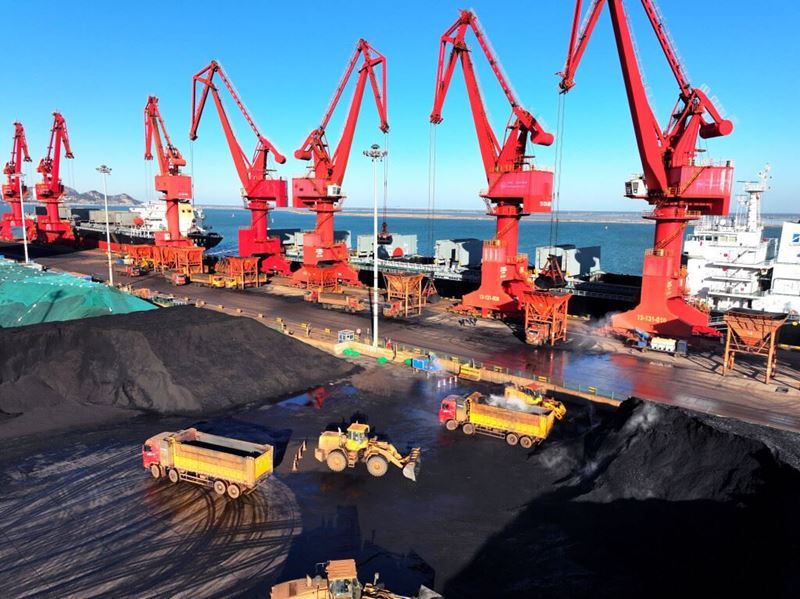
Under the plan, China will continue developing five major coal supply security bases in Shanxi, western Inner Mongolia, eastern Inner Mongolia, northern Shaanxi and Xinjiang. The country aims to develop and build large scale modern coal mines meeting high standards in these regions and increase production concentration.
By 2030, the combined output of the five major coal supply security bases is targeted to account for more than 80% of China’s total coal production.
Coal industry enters a critical transition period
Officials from the NDRC and NEA described the 15th Five Year Plan period as an important transition period for the transformation and development of China’s coal industry.
According to officials, coal consumption is expected to reach its peak during this period, while the operating environment of the industry will face profound and complex changes. The plan calls for continued exploration of coal resources, comprehensive resource assessments and increased reserves.
Future production capacity planning will take into account resource development potential and regional supply demand balances. New capacity is expected to be concentrated mainly in the five major supply security bases, while priority will be given to integrated upstream and downstream industrial development and interregional coal supply security projects.
New coal capacity to be included in unified registration system
During the 15th Five Year Plan period, new coal production capacity will be included in a unified production capacity registration system before being organized and put into operation.
Although the role of non fossil energy sources in China’s energy supply is increasing, coal is expected to maintain its important position in ensuring energy security.
Lin Boqiang, Dean of the China Institute for Studies in Energy Policy at Xiamen University, said the rapid expansion of new energy capacity is creating new challenges related to energy consumption and supply demand imbalances.
Lin stated that China needs an energy security system in which new and traditional energy sources complement each other and strategic reserves are coordinated. He noted that the intermittent nature of wind and solar power means coal will continue to play an important role in securing the country’s basic energy supply.
Robotic systems to be expanded in high risk mines
The plan also calls for accelerating the smart transformation of mines where serious disasters and major or larger scale accidents have occurred.
The use of robotic operations instead of human labor in dangerous positions and tasks with difficult working conditions is expected to be expanded.
Lin Boqiang stated that the coal industry is undergoing a comprehensive transformation while continuing to serve as a “cornerstone” and “stabilizer” of national energy security.
He noted that the energy transition requires coal to be used in a cleaner, more efficient and lower carbon manner, while the large scale integration of intermittent renewable energy sources such as wind and solar is increasing the need for greater flexibility in power systems.
Under these conditions, the application of artificial intelligence across the coal industry is expected to become an important element of the sector’s transformation.
AI to improve safety and efficiency
Lin said the use of artificial intelligence in coal mining will primarily focus on improving safety and efficiency.
Large scale models used for geological exploration, intelligent tunnel control systems and unmanned transportation vehicles could significantly reduce the number of workers operating underground. These technologies are also expected to contribute to preventing major and serious safety accidents.
The plan also aims to increase mining efficiency and resource recovery rates through intelligent control of mining equipment and optimization of overall production systems.
AI use to increase in coal chemicals
In the coal chemicals industry, artificial intelligence is expected to be used to reduce costs, improve efficiency and support product development.
AI models are planned to be used for real time optimization of complex production processes such as coal washing, gasification and synthesis. These applications are expected to enable more precise control of reaction conditions, stabilize product quality and reduce energy and material consumption per unit of output.
AI to be used in thermal power plants
The plan also calls for expanding the use of artificial intelligence in coal fired thermal power generation.
AI algorithms are expected to be used to optimize boiler combustion and steam turbine operations, as well as forecast fluctuations in electricity grid loads and changes in renewable energy generation.





Comments
No comment yet.