


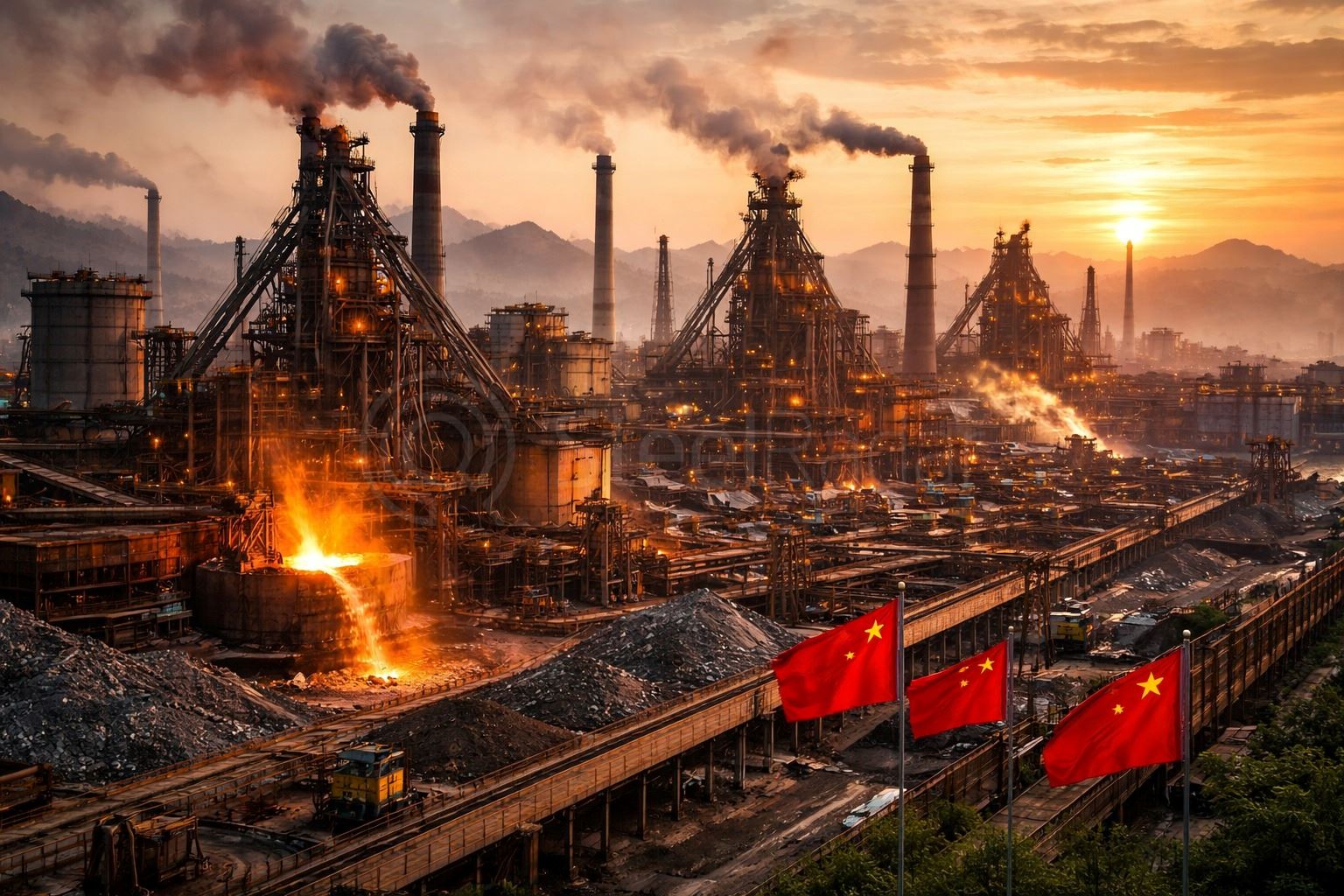
According to the Thailand Steel Industry Report published by the Thailand Iron and Steel Institute, China’s exports of semi finished and finished steel products increased by 17.5% year on year to 98.68 million tons in the first nine months of 2025, while imports saw a decrease of 24.3% to 5.15 million tons over the same period. This sharp weakening in domestic consumption in China has led excess production to be redirected toward external markets, with Thailand emerging as one of the countries most clearly affected by this pressure.
Indeed, China’s share in Thailand’s finished steel imports remains at 46% on a volume basis. In addition, finished steel inventories in China were 14.7% higher year on year as of the end of October, indicating that export pressure may persist in the short term. Market participants expect steel prices to continue fluctuating within a narrow range unless new stimulus packages supporting the real estate sector and domestic consumption are announced.
Thailand continues to meet a large portion of its domestic demand through imports. In October, finished steel imports increased by 12% to 998,723 tons, with China maintaining its position as the largest supplier with a 46% share. On the export side, a more positive outlook is observed. In October 2025, Thailand’s finished steel exports increased by 24.5% year on year to 129,578 tons. During the January to October period, total exports increased by 17.6% to 1,339,420 tons. The main export destinations during this period were Canada at 14%, Malaysia at 13% and the US at 12%.
Regional risks are also increasing. Malaysia, a neighboring country of Thailand, began imposing anti dumping duties on galvanized steel imports originating from China, South Korea and Vietnam as of 1 November 2025. This development could reshape trade flows across Southeast Asia and has the potential to increase import pressure on the Thai market as China sourced supply is redirected more heavily toward Thailand.



Comments
No comment yet.