


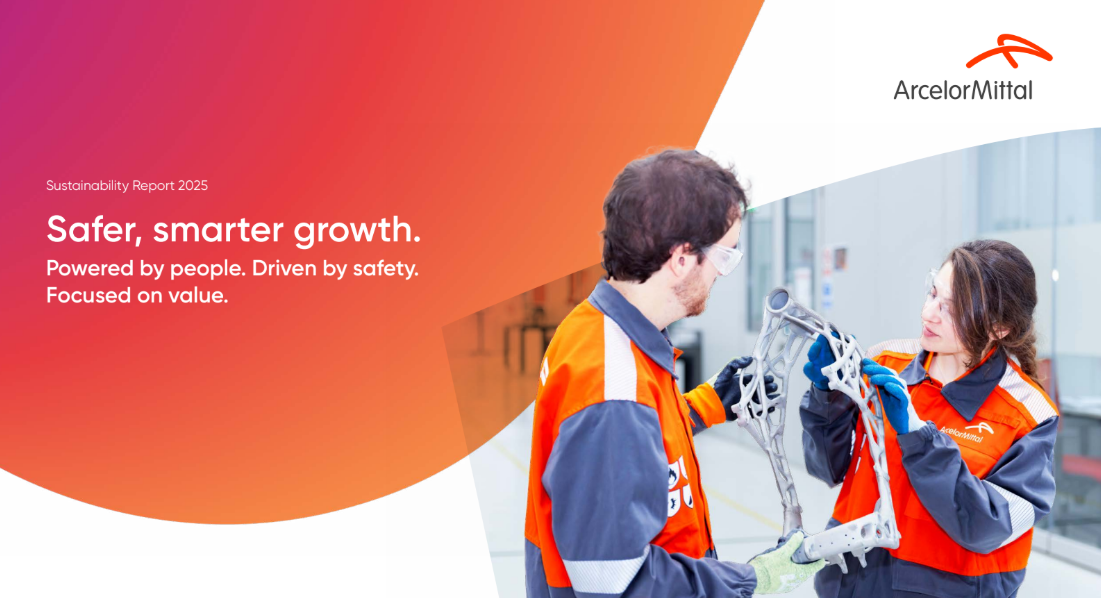
The company reported continued improvements across all key safety performance indicators over the past year, reflecting the early outcomes of its transformation program in health and safety. The fatality frequency rate (FFR) declined by more than 50% year-on-year to 0.014, marking the lowest level in the company’s history. The lost time injury frequency rate (LTIFR) decreased to 0.65, while the recordable injury rate (RIR) improved from 4.80 to 3.85.
CEO Aditya Mittal emphasized that sustainability is not merely an external requirement for the company, but a core pillar of its leadership approach, value creation strategy, and corporate responsibility framework.
Among his key remarks, Mittal highlighted the following priorities:
Uncompromising focus on safety: He reaffirmed that safety remains the company’s most critical sustainability priority and reiterated its commitment to the “zero fatalities” ambition. Despite measurable improvements in key safety indicators in 2025, he noted that six fatal incidents during the year underscore the need for continued discipline and vigilance.
Realistic approach to the climate transition: While maintaining its net-zero target for 2050, the company acknowledged the complexity and economic challenges of the energy transition. Strategic investments, including the Dunkirk electric arc furnace project, are expected to reduce emissions intensity by up to 10% by 2030.
Innovation and digitalization: Mittal described innovation as a key enabler of “smarter steels,” highlighting $335 million in R&D investment in 2025. Artificial intelligence has become an integral platform across the business, supporting safety monitoring, operational efficiency, and resilience.
Corporate legacy and future outlook: Marking 20 years of the company’s current structure and 50 years of its origins, Mittal stressed that maintaining sustainable industrial leadership is essential not only for current performance, but also for delivering long-term value to society.
On environmental sustainability and climate action, ArcelorMittal reported a 47.7% reduction in its absolute carbon footprint since 2018. The company reaffirmed its target to reduce emissions intensity by 10% by 2030 and reiterated its commitment to achieving net-zero emissions by 2050. Key initiatives include a €1.3 billion electric arc furnace investment in Dunkirk, expansion of renewable energy capacity to 1.6 GW with an additional 1.2 GW under development, and the construction of a new headquarters in Luxembourg designed as a symbol of low-carbon steel and circular design.
Innovation remains central to the company’s strategy, with $335 million invested in R&D in 2025. This led to the launch of 38 new products supporting sustainable construction and mobility, including solutions such as “Helioroof,” which integrates solar energy. The company also expanded the use of artificial intelligence across operations, deploying AI-driven systems to enhance safety monitoring and operational resilience.



Comments
No comment yet.