


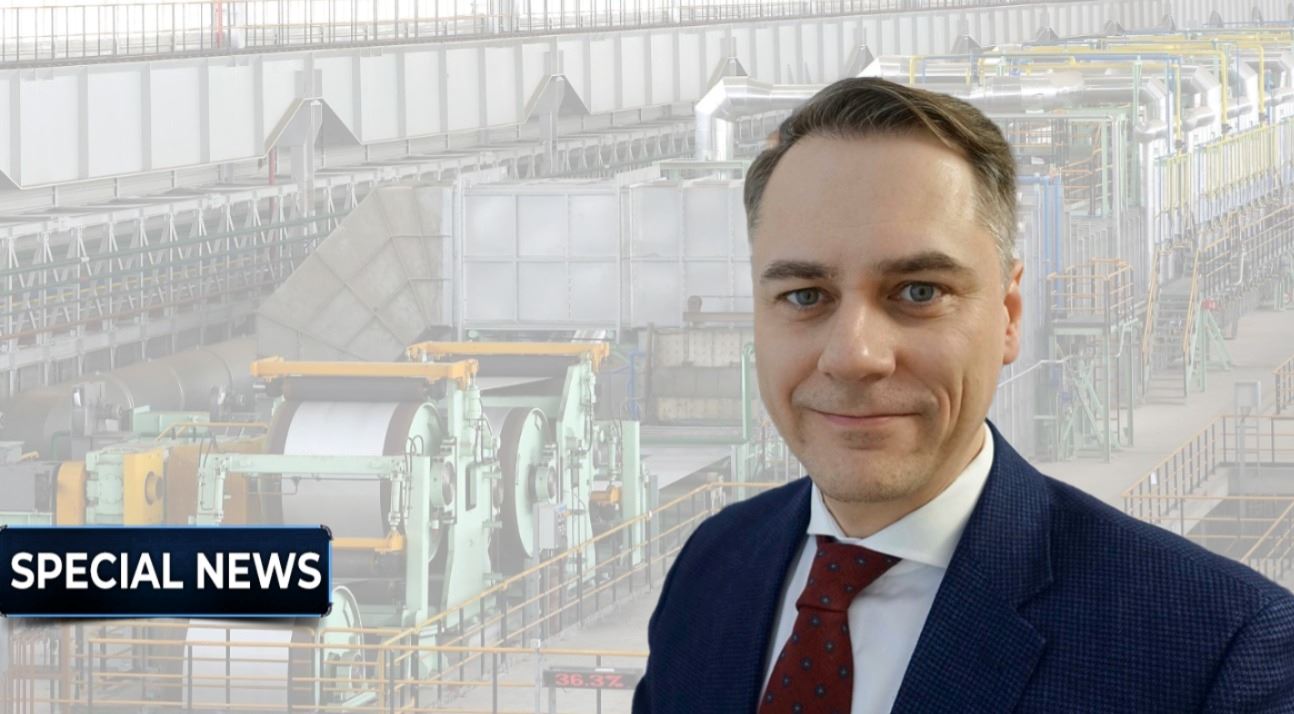
The Austria-based ANDRITZ AG, through its global technology provider ANDRITZ Metals, which supplies advanced technology equipment, plants, and engineering solutions to the iron, steel, and non-ferrous metals industries, shared exclusive insights with SteelRadar through its Head of Russia and CIS Region, Alexander Popov.
Popov emphasized that there is significant idle capacity globally and noted that in the former Soviet geography, the main issue is not growth but preserving the current position. He stressed that regional producers need to focus on niche products and high value-added steel grades.
How do you assess the current situation in the global flat steel market in 2026, particularly in terms of capacity utilization and new investment activity?
From an investment perspective, 2026 appears likely to be challenging for CIS countries, although there will not be a global decline. Even when analyzed segment by segment, the same trend continues. Structural steel production will probably decrease, while automotive steels such as advanced high-strength steels and electrical steels are expected to increase. However, it should be noted that growth in structural steel will likely occur in India, while declines may be seen in other regions. The same applies to advanced high-strength steels. I believe we will see growth in China, and in electrical steels, we may also see growth in certain EU countries and the United States.
In 2025, global plant capacity utilization for flat steel was 82%. This figure indicates the presence of significant spare production capacity. The forecast for 2026 suggests an increase of approximately 1.3% in utilization.
“We are in a situation where we have to import niche products”
How would you define the current position of the CIS steel industry in global markets?
Regarding the flat products segment in which Andritz operates, there is tremendous growth potential in our markets. This primarily concerns advanced high-strength steel grades. For example, today no CIS country has the capacity to produce automotive outer body panels. I believe Kazakhstan and Uzbekistan could change this situation; efforts are being made to explore the development possibilities of this segment.
Speaking more broadly about the metallurgical industry, the fundamental characteristic of the entire former Soviet geography is not expansion, but maintaining its current position. While other countries actively developed technologies, we focused on survival and later tried to preserve or secure the status quo. As a result, we find ourselves in a situation where we produce standard products but have to import all niche products, such as stainless steels or advanced high-strength steel grades.
“Each country in the CIS has its own unique challenges”
What are the biggest operational challenges CIS steel producers face in terms of financing, access to technology, logistics, or market access?
To slightly modify Tolstoy’s famous quote: “Happy families are all alike; every unhappy family is unhappy in its own way.” Our situation is similar. Each CIS country has its own specific challenges.
Russia has been excluded from global supply chains and faces a wide range of barriers, primarily in access to technology and entry into other markets.
Next comes Kazakhstan, a significant player. Due to the excessive wear of its equipment, it needs to pursue an extensive investment strategy. At the same time, I see positive changes there.
Uzbekistan is also trying to enter the race, but first it must secure its raw material resources. They are moving in the right direction but need to be more aggressive in this regard.
Azerbaijan is no exception. I see a sincere desire to enter international markets with niche products and to modernize production capacities. Overall, I observe that each country is trying to find its own niche, which is a correct and justified approach.
However, in general, the biggest issue is personnel. I have been working with metallurgical companies in the CIS for over 20 years. Although significant progress has been made in production safety, we all still have much to do in terms of workforce training and overall plant equipment. Even in the 21st century, I have seen workers in metallurgical plants lighting fires under oil baths to heat large bearings before installation. In some plants, during investment projects, a critical bottleneck right next to the renovated area is overlooked and left unresolved.
If you were advising a steel producer in the region today, what three key recommendations would you give?
-
Find your niche. Do not try to be everything to everyone. Focus on a specific area where you can achieve superiority.
-
Invest in highly automated equipment. This reduces the human factor and ensures consistent, repeatable quality. Most importantly, never cut costs on training your personnel or properly equipping them.
-
Never hide behind your reputation. You must think outside the box. Never become complacent. Always search for the next niche to fill, invest in R&D, and strive to be number one in everything you do.




Comments
No comment yet.