


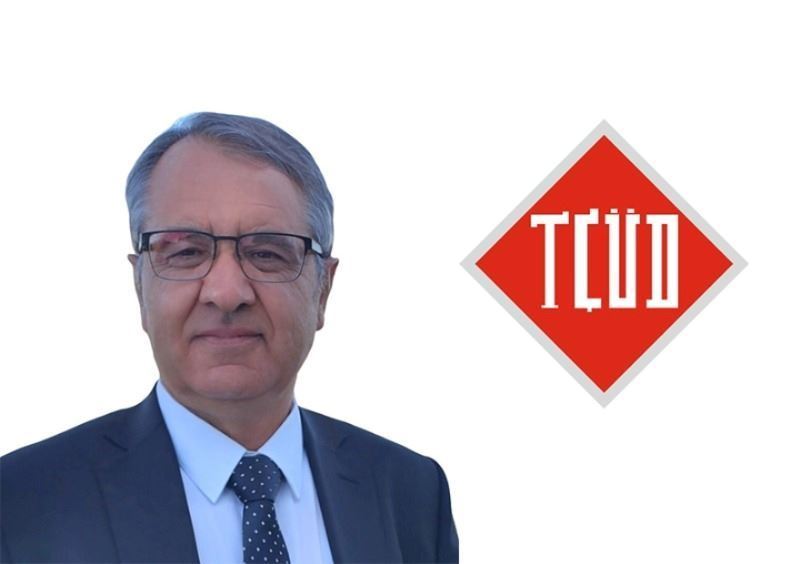
Akbulut emphasized that thanks to Türkiye’s production method advantage, the country has lower carbon intensity compared to its global competitors.
The program, held at Adıyaman University’s Mustafa Vehbi Koç Conference Hall, was attended by Adıyaman Mayor Abdurrahman Tutdere, Adıyaman University Rector Prof. Dr. Mehmet Keleş, Chief Public Prosecutor Gökhan Şahin, heads of public institutions, NGO representatives, academic and administrative staff, and students.
In his presentation, Akbulut shared data on Türkiye’s steel production infrastructure, noting that the country has a total of 44 crude steel plants, including 3 integrated plants (BOF), 30 electric arc furnace (EAF) plants, and 11 induction furnace facilities. He stated that these facilities are mainly concentrated in Kocaeli, İzmir, Hatay (İskenderun), Karabük, Zonguldak, Tekirdağ, Osmaniye, and Samsun.
Sharing 2025 global production rankings, Akbulut said that Türkiye ranked 7th in the world with 38.1 million tons of crude steel production. He noted that production increased by 3.3% from 36.8 million tons in 2024 to 38.1 million tons in 2025, while global production declined by 2.0% to 1.8 billion tons. Türkiye’s share of global output stood at 2.1%.
Akbulut also stated that Türkiye’s finished steel consumption reached 39.3 million tons in 2025. In overall foreign trade, exports totaled 15.1 million tons, while imports amounted to 18.9 million tons. In trade with the EU, Türkiye exported 6.0 million tons in 2025, while imports from the EU fell to 2.0 million tons.
Highlighting Türkiye’s advantageous position in terms of carbon emissions, Akbulut said that 70% of production is carried out in electric arc furnaces and 30% in integrated plants. According to a study conducted by Laplace Conseil, Türkiye’s average CO₂ emissions amount to 1.10 tons per ton of steel, which is below the global average of 1.92 tons, as well as China’s 2.10 tons and India’s 2.18 tons. He added that emissions in scrap-based EAF production range between 0.3–0.7 tons of CO₂, while in the conventional blast furnace (BOF) route, emissions increases to 2.0–2.3 tons of CO₂.
Akbulut stated that under the Ministry of Industry and Technology’s Low-Carbon Steel Project, projections for 2053 foresee total capacity increasing to 97.78 million tons, with the EAF share reaching 85%, while total production is expected to stand at 69.06 million tons. According to the prepared report, a transition to green hydrogen, low-carbon production technologies, and carbon capture, utilization, and storage (CCUS) applications is planned starting from 2026.
Recalling that the Carbon Border Adjustment Mechanism (CBAM) will be fully implemented as of 2026, Akbulut noted that free allowances under the EU Emissions Trading System will begin to be reduced by 2.5% in 2026 and will be completely phased out by 2034. By 2034, production costs are projected to increase by 11% due to carbon taxation. He emphasized that while the technologies required for green steel production are known, their large-scale commercialization beyond pilot applications is still awaited by the Turkish steel industry. He also stressed the importance of demand-side sectors accepting the significant price premiums that will arise from green steel production. Studies indicate that while the global average cost of integrated steel production is around USD 390 per ton, costs in green hydrogen-based DRI + EAF production could reach USD 650 per ton.
Addressing scrap supply, Akbulut stated that Türkiye was the world’s largest scrap importer in 2024 with 20.4 million tons. He noted that several countries have already banned or restricted scrap exports and that there are concerns the number of such countries could soon reach 60. According to studies by various organizations, achieving the 2053 net-zero target will require approximately USD 31 billion in investments in the steel sector. Together with the cement sector, total investment needs in critical industries exceed USD 70 billion, while projections covering the entire industrial sector amount to USD 265 billion.
Akbulut also drew attention to differences in government support, noting that EU countries have provided EUR 15.1 billion in grants to the steel sector, whereas Türkiye lacks comparable support mechanisms. He also pointed to potential risks stemming from additional U.S. tariffs and possible trade diversion under the EU’s new free trade agreements.
The presentation concluded that Türkiye’s EAF-dominant production structure provides a significant initial advantage in the green steel transition. However, financing needs, raw material access constraints, and global trade pressures remain key risks for the sector.



Comments
No comment yet.