


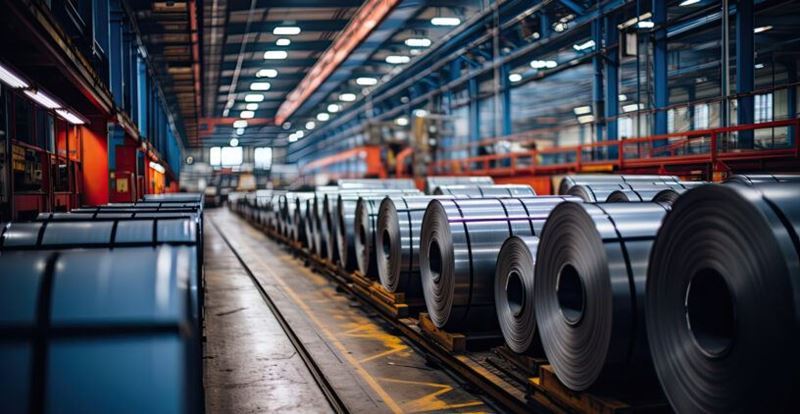
The initiatives include the use of hydrogen, AI-based production optimization and the conversion of steel slag into green cement, all of which represent critical technologies for India’s net-zero ambitions.
According to a statement by the Embassy of Sweden, the projects are funded by the Ministry of Science and Technology of India, the Government of India and the Swedish Energy Agency under the LeadIT industrial transition partnership. The initiatives aim to decarbonize sectors such as steel and cement, which account for a significant share of India’s total emissions.
The statement indicated that the projects will be carried out in collaboration with leading companies including Tata Steel, JK Cement, Ambuja Cements, Jindal Steel and Power, Prism Johnson, Cemvision, Ecometrix AM, Höganäs AB, Hoganas India Ltd, Captimise AB, Kanthal and Swerim. India’s leading universities—IIT Bombay, IIT-ISM Dhanbad, IIT Hyderabad, IIT Bhubaneswar and Datta Meghe College of Engineering—are joining as academic partners.
During the announcement of the new cooperation projects, Per Andersson, Head of the LeadIT Secretariat, stated that “we hope these partnerships will inspire other countries seeking to accelerate industrial transformation”.
The statement emphasized that heavy industry accounts for around one-quarter of global greenhouse gas emissions, noting that India’s iron and steel sector represents 10–12% of national emissions, while the cement sector accounts for roughly 6%.
Details of the seven projects
1. Rebirth of steel slag – Tata Steel, Cemvision, IIT-ISM Dhanbad, JK Cement
This project aims to utilize steel industry by-products in cement production. Steel slag will be processed for high metal recovery and converted into a sustainable supplementary cementitious material (SCM).
2. CO₂ conversion through microwave plasma – Tata Steel, IIT Hyderabad, GREEN14
The project targets the conversion of CO₂ from blast furnace off-gas into CO using microwave plasma, followed by reuse in industrial processes.
3. Integrated carbon capture unit – IIT Bombay, Ambuja Cements, EcoTech Solutions
A feasibility study will be conducted on establishing a carbon capture and utilization (CCU) unit at a cement plant.
4. Concrete design with artificial intelligence – Ecometrix AM, Prism Johnson, Datta Meghe Engineering College
The applicability of the AIbased ACORN platform will be examined with the goal of reducing the climate impact of ready mixed concrete production.
5. CO₂-neutral steel with electric heating – Kanthal, Swerim, Jindal Steel and Power
The project will assess electric gas heating technologies based on hydrogen and process gases to reduce CO₂ emissions.
6. Electric green iron production – Metsol AB, Höganäs AB, Hoganas India, IIT Bhubaneswar
A pilot plant feasibility study will be carried out for a fossil-free iron production process based on a hydrogen and electricity powered rotary kiln.
7. Transforming cement production with carbon capture – Captimise AB, My Home Industries (Maha Cement)
Three carbon capture technologies amine absorption, hot potassium carbonate and membrane-based systems will be compared.





Comments
No comment yet.