


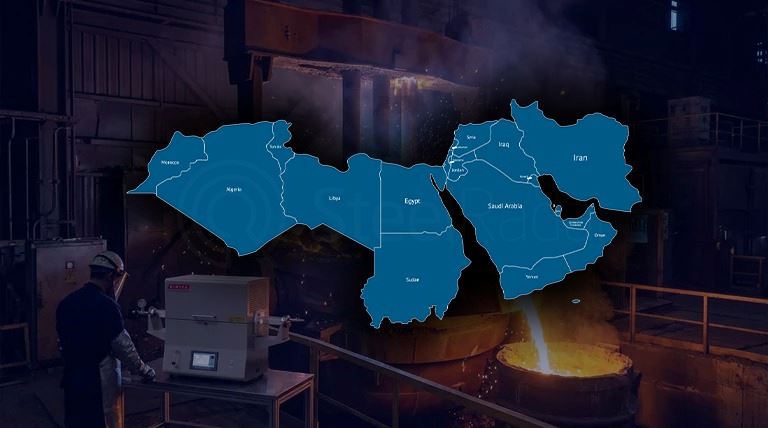
The Middle East and Africa steel market is navigating a complex landscape, striving to maintain the supply-demand balance while battling rising logistical costs under the shadow of geopolitical tensions. Specifically, the pressure on maritime routes caused by regional conflicts is narrowing the price gap in steel while significantly increasing the strategic importance of local producers.
The volatile environment in the Middle East is not only a humanitarian crisis but also a major threat to the logistical arteries of global trade. Security risks in and around the Red Sea have dramatically driven up insurance premiums and freight costs. This situation has effectively closed arbitrage opportunities by eroding the competitive advantage of low-cost steel arriving from distant routes, such as the Far East. Access to safe ports and short supply chains has now superseded price as the primary concern. In this context, the strategic locations of countries like Algeria and Egypt within the Mediterranean basin provide them with a logistical "protective shield." Furthermore, the risk of war in the region creates unpredictable fluctuations in energy prices, directly impacting the cost structures of Electric Arc Furnace (EAF) facilities.
Saudi Arabia's delivered HRC price of 2,400 SAR (~$640/ton) reflects strong appetite to meet demand driven by the Kingdom's massive infrastructure projects under Vision 2030. Algeria and Egypt are leveraging their bridge positions between Africa and Europe, prioritizing the use of domestic iron ore and scrap over imported billets. Algeria's rebar price of ~$730/ton underscores efforts to preserve market share despite elevated production costs.
Libya's HBI price of ~$340/ton (FOB) demonstrates the region's strong competitiveness in direct-reduced iron derivatives and confirms its continued role as a critical supplier for global EAF-based steelmakers.
In the Middle East steel market, deliverability is set to remain the top priority, with "price" taking a secondary role. Every increase in freight costs will further consolidate the dominance of regional giants such as Algeria, Egypt, and Saudi Arabia over their domestic markets. However, the persistent squeeze in raw material (billet) prices within the $500–580/ton range will continue to exert significant pressure on the profit margins of finished product manufacturers.





Yorumlar
Henüz yorum yapılmadı