


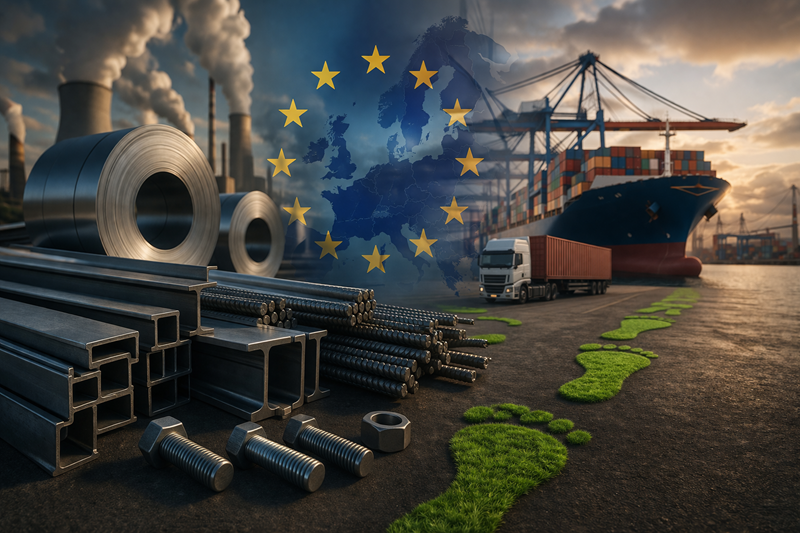
The new regulation expands carbon cost obligations beyond raw materials to include a wide range of downstream finished and semi-finished products across the production chain.
According to the draft, a broad group of products particularly those with high steel and aluminum content will be included in the mechanism as of January 1, 2028. Within this scope, many items will fall under CBAM obligations, including fasteners such as screws, bolts, and nuts, as well as pipes, tanks, construction components, and railway materials. In addition, more complex products such as engines, pumps, white goods, industrial machinery, electrical equipment, and certain commercial vehicles will also be covered.
The regulation also introduces changes to the emission calculation methodology for imported electricity starting January 1, 2026, while requiring the first reports for newly included products to be submitted by September 30, 2027. Full-scale carbon pricing will begin on January 1, 2028.
One of the key highlights of the draft is the introduction of measures against “abusive practices.” Accordingly, if companies artificially restructure supply chains to underreport emissions or manipulate actual emission data, stricter inspections will be triggered. The Commission will closely monitor import declarations and emissions data, identify high-risk cases, and request additional documentation where necessary.
The scrap metal calculation methodology is also being revised. Pre-consumer scrap, which is currently treated as “zero-emission,” will now be included in emissions calculations under the new framework. This aims to prevent the understatement of emissions in imported products through scrap usage, while post-consumer scrap will remain excluded.
The draft also allows recognition of accreditation bodies from third countries by the EU, providing more flexibility in certification processes. This is expected to facilitate cooperation with local verifiers for companies in exporting countries such as Türkiye.
Meanwhile, an emergency clause in the regulation allows certain products to be temporarily excluded from the mechanism in case of serious supply chain disruptions or extreme price volatility.
Overall, the draft demonstrates the EU’s intention to extend carbon cost obligations beyond basic industrial inputs across the entire manufacturing chain, requiring exporters to manage emissions more comprehensively throughout their production processes.





Yorumlar
Henüz yorum yapılmadı