


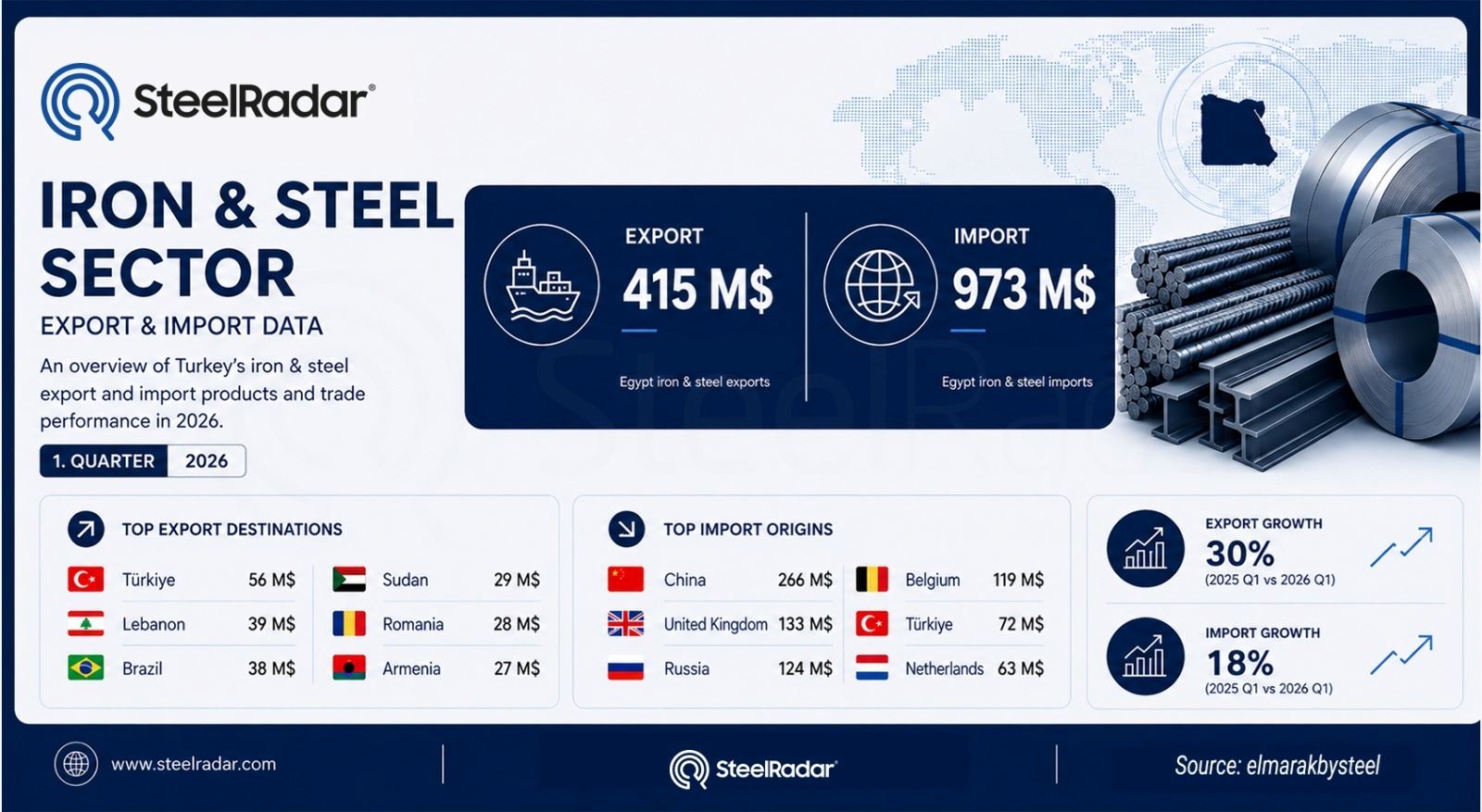
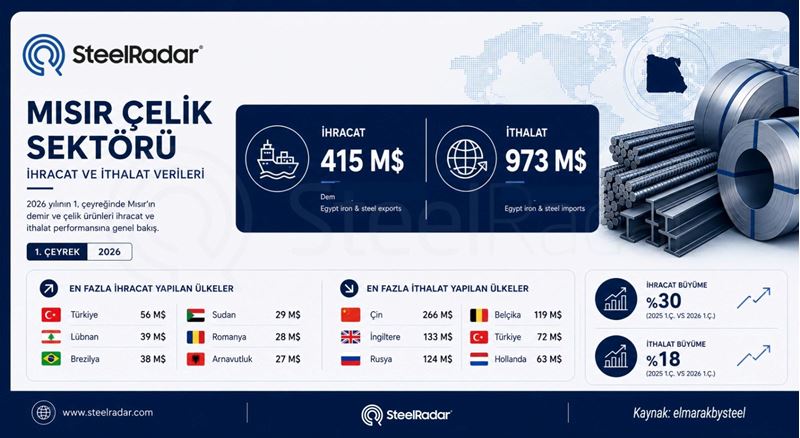
During this period, Türkiye's imports from Egypt reached $56 million. Türkiye was followed by Lebanon with $39 million, Brazil with $38 million, and Sudan with $29 million in imports. Romania ranked fifth with $28 million, while Albania followed with $27 million worth of purchases. Türkiye's position at the top of the list once again confirmed the significance of steel trade between the two countries, as well as their strategic partnership and strong presence in regional markets.
On the other hand, China maintained its clear leadership as Egypt's largest external steel supplier. Egypt's iron and steel imports from China reached $266 million, accounting for the largest share of the country's total steel imports. Other major suppliers after China were the United Kingdom with $133 million, Russia with $124 million, and Belgium with $119 million. Türkiye also secured a place among Egypt's leading suppliers, ranking fifth with $72 million in steel exports to the country. The Netherlands followed in sixth place, supplying $63 million worth of steel products. These figures indicate that Egypt continues to rely heavily on suppliers from Asia and Europe for both steel raw materials and finished products.
The first-quarter data showed that Egypt has maintained its influential role in regional steel trade while continuing to depend on external sources to meet domestic market demand. China's strong and dominant position as a supplier, combined with Türkiye's ranking among the leading countries both as a buyer and a seller, highlights the critical importance of both countries in Egypt's steel market. Looking ahead, construction activity across the region, new infrastructure projects, and potential shifts in global trade routes are expected to be key factors influencing Egypt's steel demand. At the same time, developments in the country's domestic steel production capacity are likely to play an important role in shaping the future balance of its foreign trade.




Yorumlar
Henüz yorum yapılmadı