


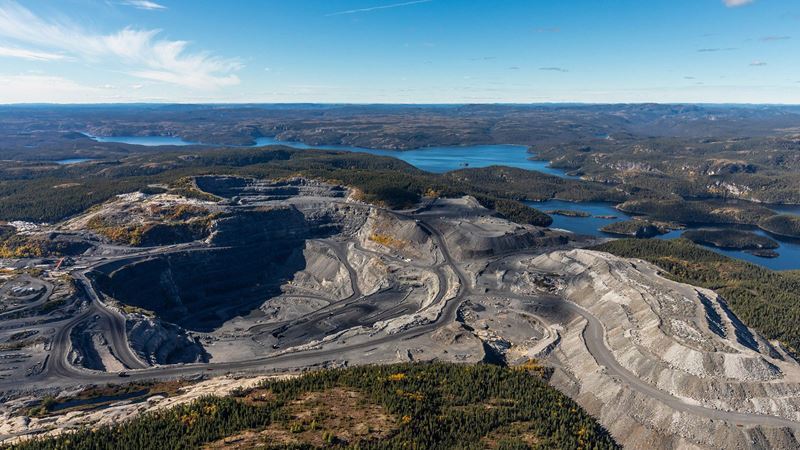
The company presented a new roadmap aimed at delivering the sector’s highest returns by moving toward a “stronger, sharper and simpler” structure. CEO Simon Trott and the executive team detailed the goal of becoming the world’s most valuable metals and mining company by unlocking the full potential of the portfolio with “the right assets in the right markets.”
The new strategy is built on three pillars. Under the first pillar, operational excellence, Rio Tinto is consolidating its activities into three global business groups: iron ore, copper and aluminium & lithium. This streamlined structure will support a production model prioritizing safety, emphasising efficiency and productivity, and leveraging best-in-class orebody knowledge. The second pillar, project delivery, focuses on enhancing organic growth options through large-scale and efficient projects. The third pillar strengthens capital discipline, with the company planning to maintain a robust balance sheet through disciplined capital allocation.
Rio Tinto stated that short-term focus areas are already delivering tangible outcomes. Production is expected to increase by 7 percent in 2025, while compound annual production growth is projected at 3 percent through 2030. This expansion will be supported by ramp-ups at Oyu Tolgoi in copper, Simandou in iron ore and the Arcadium and Rincon assets in lithium. The company reported an annualised efficiency gain of 650 million USD achieved within the first three months of its operational improvement programme. These gains stemmed from organisational simplification, shifting authority and accountability to assets, strengthening operational discipline and reshaping the portfolio by stopping non-core projects.
Rio Tinto also announced a plan to opportunistically unlock 5–10 billion USD in cash from the existing asset base. The company noted that this capital would be realised in areas where third-party financing is available at a cost below its own capital cost, adding that ownership and partnership options are being assessed in land, infrastructure, mining and processing assets. Strategic reviews of the Iron and Titanium and Borates units are progressing, with market testing of the assets set to follow.
CEO Simon Trott stated:
“Rio Tinto is advancing from a position of strength as we sharpen and simplify the business to deliver leading sector returns. We will unlock the full potential of our diversified portfolio by lifting performance through discipline, efficiency and the unique growth opportunities ahead of us. We are delivering strong productivity gains, with more to come. Releasing cash from the asset base where third-party investment is logical will strengthen our balance sheet and allow us to maintain returns as we invest for the future with discipline. Our experienced leadership team is committed to delivering on our ambition to be the world’s most valuable metals and mining company for our shareholders, our employees, our partners and the communities where we operate.”
Other highlights from the meeting included expectations for a 4 percent decrease in unit operating costs between 2024 and 2030. Rio Tinto stated that, following completion of the Oyu Tolgoi underground copper mine, the Simandou iron ore project and the lithium developments at Rincon, mid-term capital expenditure would fall below 10 billion USD annually after 2028. Ongoing lithium projects are expected to reach an annual capacity of around 200 thousand tonnes by 2028, while new investments will proceed only when market conditions and return expectations support them.
Based on long-term price assumptions, the company sees a 40–50 percent increase potential in EBITDA by 2030. This projection reflects the combined impact of a 20 percent increase in copper-equivalent output, the operational excellence programme and sustained capital discipline. The diversified portfolio is expected to deliver a more balanced earnings profile, with stronger contributions from copper and aluminium from 2025 onward and more evenly distributed financial performance across the three core business groups in the mid-term.
Rio Tinto reaffirmed the strength of its balance sheet, noting that low net debt provides resilience against cyclical fluctuations. The company has maintained a stable dividend policy, distributing 40–60 percent of earnings for nine consecutive years.
The company also updated its strategic decarbonisation plan, which targets a 50 percent reduction in emissions by 2030. Capital investment required for this objective has been revised to 1–2 billion USD, down from the previous estimate of 5–6 billion USD. The reduction reflects increased use of third-party financing models for renewable energy developments. Rio Tinto emphasised that technologies enabling net-zero in the hardest-to-abate sectors require time to mature, which means investments will progress step by step within a disciplined financial framework.
For 2025, Rio Tinto increased its copper production guidance to 860–875 thousand tonnes and lowered the unit cost outlook to 80–100 cent/lb. Bauxite output is expected to exceed 61 million tonnes, and aluminium production is forecast to land at the upper end of its guidance range. IOC guidance was updated to 9.0–9.5 million tonnes, while first commercial output of 5–10 million tonnes from Simandou is scheduled to begin in 2026.
The company also presented capital expenditure expectations of around 11 billion USD for 2025 and 2026. In the mid-term, annual spending is targeted to remain below 10 billion USD. Rio Tinto additionally shared its production expectations for 2026 across iron ore, copper, aluminium, lithium and bauxite.

Yorumlar
Henüz yorum yapılmadı