


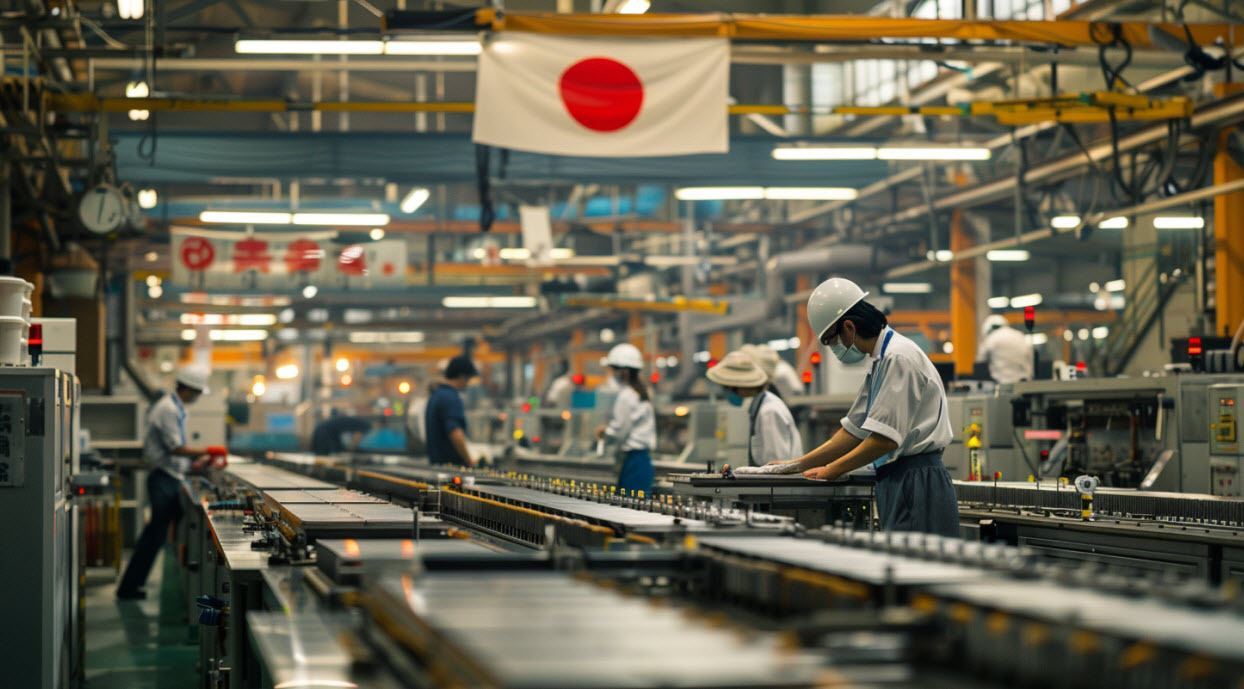
The main factors behind this decline are as follows. Basic oxygen furnace (BoF) steel production dropped by 5.5% to 5.007 million tons, while electric arc furnace (EAF) production remained almost stable at 1.908 million tons with a marginal decrease of 0.2%. Production figures varied across product groups. Hot-rolled coil (HRC) production recorded a sharp decline of 8.5%, while cold-rolled coil (CRC) production fell by 7.9%. In contrast, galvanized sheet (HDG) production increased by 7.3%, and plate production rose by 5%.
The decline in overseas demand for Japan’s finished steel products is seen as one of the main reasons behind the drop in total production. Steel exports in March decreased by 9.1% year-on-year to 2.49 million tons. Due to global tensions and rising competition, shipments to Japan’s key markets declined significantly: exports to the Middle East fell by 24.6%, to China by 15.2%, and to ASEAN countries by 14.3%. The domestic construction sector continues to show weak activity due to ongoing labor shortages and high material costs.
Japan’s Ministry of Economy, Trade and Industry (METI) expects crude steel production to decline by a further 0.7% to 20 million tons in the April–June period (second quarter), due to weak manufacturing and construction sectors. Total demand (domestic and external combined) is also projected to decrease by 1.5%. Meanwhile, the European Commission has signaled that the anti-dumping duties on grain-oriented electrical steel (GoES) from Japan, currently ranging between 35.9% and 39%, may expire on January 18, 2027.



Yorumlar
Henüz yorum yapılmadı